There are many sources to find out something about everything. Until now, there’s been no good place for you to find out everything about something. The infochimps.org community is assembling and interconnecting the world’s best repository for raw data — a sort of giant free almanac, with tables on everything you can put in a table. Built by data nerds, used by data nerds, it’s a central source for the information you need to power the projects the world needs. This has been added to the tools section of Research Resources Subject Tracer™ Information Blog. This has been added to Statistics Resources Subject Tracer™ Information Blog.
The International Journal of Electronic Business (IJEB) is a double-blind .refereed and authoritative reference dealing with working and potential e-business models and applications as well as emerging issues of interest to professionals and academics. The objectives of the IJEB are to develop, promote and coordinate the development and practice of electronic business methods. It also aims to help professionals working in the field, business educators and policy-makers to contribute, to disseminate information and to learn from each other’s work. The international dimension is emphasised in order to overcome cultural and national barriers and to meet the needs of accelerating technological change and changes in the global economy. The IJEB publishes original and review papers, technical reports, case studies, conference reports, management reports, book reviews, and notes, commentaries, and news. Contribution may be by submission or invitation, and suggestions for special issues and publications are welcome. This has been added to eCommerce Resources Subject Tracer™ Information Blog.
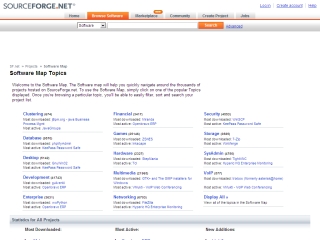
The Software map will help you quickly navigate around the thousands of projects hosted on SourceForge.net. To use the Software Map, simply click on one of the popular Topics displayed. Once you’re browsing a particular topic, you’ll be able to easily filter, sort and search your project list. This has been added to Script Resources Subject Tracer™ Information Blog. This has been added to World Wide Web Reference Subject Tracer™ Information Blog.
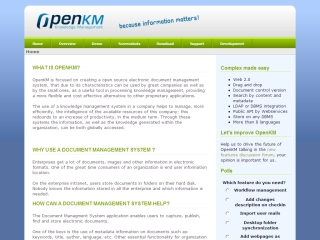
OpenKM is focused on creating a open source electronic document management system, that due to its characteristics can be used by great companies as well as by the small ones, as a useful tool in processing knowledge management, providing a more flexible and cost effective alternative to other proprietary applications. The use of a knowledge management system in a company helps to manage, more efficiently, the intelligence of the available resources of this company; this redounds to an increase of productivity, in the medium term. Through these systems the information, as well as the knowledge generated within the organization, can be both globally accessed. This has been added to Knowledge Discovery Subject Tracer™ Information Blog. This has been added to the tools section of Research Resources Subject Tracer™ Information Blog.
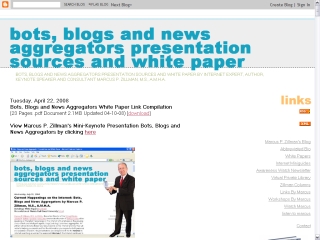
Presentation: The Future of the Internet – Bots, Blogs, News Aggregators, MashUps and the Web 2.0++ by Marcus P. Zillman, M.S., A.M.H.A.
Presented to: PCBUG, SIG Genealogy of Naples, Florida
Presentation Sources:
Bots, Blogs and News Aggregators – Resources and White Paper by Marcus P. Zillman, M.S., A.M.H.A. http://www.botsblogs.com/
Bots, Blogs and News Aggregators – Mini Keynote Presentation by Marcus P. Zillman, M.S., A.M.H.A., Streaming 12 Minute Video http://www.MarcusZillman.tv/
The latest research shows that when prospects search for your company on the Internet, the top 10 listings are likely to include the following:
a) 3 listings from consumer posts to blogs, message boards, and opinion sites,
b) 2 listings from experts,
c) 2 listings from your own corporate site,
d) 1 listing from an online publication, and
e) 2 listings from other sources.
This confirms the need for immediate business intelligence to constantly monitor and evaluate the prospects ongoing searching results for your company, brand, and product.
Marcus P. Zillman, M.S., A.M.H.A., Executive Director of the Virtual Private Library™, Internet expert, author, speaker, consultant and creator/founder of BotSpot.com will be speaking on the latest happenings on the Internet with emphasis on the growing areas of bots and intelligent agents, blogs (weblogs), news aggregators, MashUps and the Web 2.0++ . Mr. Zillman will be discussing these new resources about the Internet and how they will relate to helping you search and find the information you require for both personal and academic research. His presentations are designed both for the “newbie” to Internet searching as well as the seasoned “Internaut”. The Internet continues to change at a record pace, and discovering the latest tools to make your Internet search both easy and competent is the goal of this presentation. Will eMail soon be replaced by RSS and news aggregators? Are blogs, currently the fastest growing area of the Internet, a fad or will they change the entire Internet landscape? Will Mash-Ups and the Web 2.0 replace the current Internet as we know it? These and other questions will be discussed during this presentation by one of the Internet’s pioneers and bot and artificial intelligence experts, Marcus P. Zillman. His latest links and resources are available by clicking here.
Time: 1:00pm
Date: Tuesday, April 22, 2008
Group: PCBUG, SIG Genealogy of Naples, Florida
Location: Naples Branch Library, 650 Central Ave., Naples, Fl
PhysioNet offers free access via the web to large collections of recorded physiologic signals and related open-source software. The PhysioNet web site is a public service of the PhysioNet Resource funded by the National Institutes of Health’s NIBIB and NIGMS. The PhysioNet Resource, intended to stimulate current research and new investigations in the study of complex biomedical and physiologic signals, has three closely interdependent components: a) PhysioBank is a large and growing archive of well-characterized digital recordings of physiologic signals and related data for use by the biomedical research community. PhysioBank currently includes databases of multi-parameter cardiopulmonary, neural, and other biomedical signals from healthy subjects and patients with a variety of conditions with major public health implications, including sudden cardiac death, congestive heart failure, epilepsy, gait disorders, sleep apnea, and aging. These collections include data from a wide range of studies, as developed and contributed by members of the research community; b) PhysioToolkit is a large and growing library of software for physiologic signal processing and analysis, detection of physiologically significant events using both classical techniques and novel methods based on statistical physics and nonlinear dynamics, interactive display and characterization of signals, creation of new databases, simulation of physiologic and other signals, quantitative evaluation and comparison of analysis methods, and analysis of nonequilibrium and nonstationary processes. A unifying theme of many of the research projects that contribute software to PhysioToolkit is the extraction of hidden information from biomedical signals, information that may have diagnostic or prognostic value in medicine, or explanatory or predictive power in basic research. All PhysioToolkit software is available in source form under the GNU General Public License (GPL); and c) PhysioNet is not only the name of the Resource, but also of its web site, physionet.org. The PhysioNet web site was established by the Resource as its mechanism for free and open dissemination and exchange of recorded biomedical signals and open-source software for analyzing them, by providing facilities for cooperative analysis of data and evaluation of proposed new algorithms. In addition to providing free electronic access to PhysioBank data and PhysioToolkit software, the PhysioNet web site offers service and training via on-line tutorials to assist users at entry and more advanced levels. The PhysioNet web site is a public service of the Resource. This has been added to Biological Informatics Subject Tracer™ Information Blog.
Are you about to make an International long distance phone call? Are you planning a trip to a foreign destination? Are you preparing for a web cast or online meeting? Are you looking for a free clock for your own web site or blog? With the Internet bringing everyone closer together, we still have to deal with our different locations having different times. World Time Server is here to help! World Time Server provides correct and current time in any world time zone, country or major city. Accurate adjustments for Daylight Saving Time (or Summer Time) are made according to each location’s rules and laws. No matter what time zone a country or city is located in, this is your top choice for a clock resource site. This has been added to the tools section of Research Resources Subject Tracer™ Information Blog.
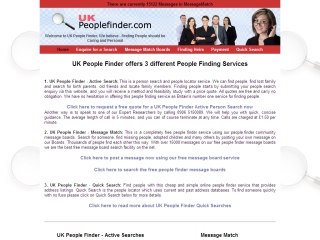
UK People Finder – They can find people, find lost family and search for birth parents, old friends and locate family members. Finding people starts by submitting your people search enquiry via their website, and you will receive a method and feasibility study with a price quote. All quotes are free and carry no obligation. They have no hesitation in offering this people finding service as Britain’s number one service for finding people. This has been added to Finding People Subject Tracer™ Information Blog.
Presentation: The Future of the Internet – Bots, Blogs, News Aggregators, MashUps and the Web 2.0++ by Marcus P. Zillman, M.S., A.M.H.A.
Presented to: PCBUG, SIG Genealogy of Naples, Florida
Presentation Sources:
Bots, Blogs and News Aggregators – Resources and White Paper by Marcus P. Zillman, M.S., A.M.H.A. http://www.botsblogs.com/
Bots, Blogs and News Aggregators – Mini Keynote Presentation by Marcus P. Zillman, M.S., A.M.H.A., Streaming 12 Minute Video http://www.MarcusZillman.tv/
The latest research shows that when prospects search for your company on the Internet, the top 10 listings are likely to include the following:
a) 3 listings from consumer posts to blogs, message boards, and opinion sites,
b) 2 listings from experts,
c) 2 listings from your own corporate site,
d) 1 listing from an online publication, and
e) 2 listings from other sources.
This confirms the need for immediate business intelligence to constantly monitor and evaluate the prospects ongoing searching results for your company, brand, and product.
Marcus P. Zillman, M.S., A.M.H.A., Executive Director of the Virtual Private Library™, Internet expert, author, speaker, consultant and creator/founder of BotSpot.com will be speaking on the latest happenings on the Internet with emphasis on the growing areas of bots and intelligent agents, blogs (weblogs), news aggregators, MashUps and the Web 2.0++ . Mr. Zillman will be discussing these new resources about the Internet and how they will relate to helping you search and find the information you require for both personal and academic research. His presentations are designed both for the “newbie” to Internet searching as well as the seasoned “Internaut”. The Internet continues to change at a record pace, and discovering the latest tools to make your Internet search both easy and competent is the goal of this presentation. Will eMail soon be replaced by RSS and news aggregators? Are blogs, currently the fastest growing area of the Internet, a fad or will they change the entire Internet landscape? Will Mash-Ups and the Web 2.0 replace the current Internet as we know it? These and other questions will be discussed during this presentation by one of the Internet’s pioneers and bot and artificial intelligence experts, Marcus P. Zillman. His latest links and resources are available by clicking here.
Time: 1:00pm
Date: Tuesday, April 22, 2008
Group: PCBUG, SIG Genealogy of Naples, Florida
Location: Naples Branch Library, 650 Central Ave., Naples, Fl
PhysioNet offers free access via the web to large collections of recorded physiologic signals and related open-source software. The PhysioNet web site is a public service of the PhysioNet Resource funded by the National Institutes of Health’s NIBIB and NIGMS. The PhysioNet Resource, intended to stimulate current research and new investigations in the study of complex biomedical and physiologic signals, has three closely interdependent components: a) PhysioBank is a large and growing archive of well-characterized digital recordings of physiologic signals and related data for use by the biomedical research community. PhysioBank currently includes databases of multi-parameter cardiopulmonary, neural, and other biomedical signals from healthy subjects and patients with a variety of conditions with major public health implications, including sudden cardiac death, congestive heart failure, epilepsy, gait disorders, sleep apnea, and aging. These collections include data from a wide range of studies, as developed and contributed by members of the research community; b) PhysioToolkit is a large and growing library of software for physiologic signal processing and analysis, detection of physiologically significant events using both classical techniques and novel methods based on statistical physics and nonlinear dynamics, interactive display and characterization of signals, creation of new databases, simulation of physiologic and other signals, quantitative evaluation and comparison of analysis methods, and analysis of nonequilibrium and nonstationary processes. A unifying theme of many of the research projects that contribute software to PhysioToolkit is the extraction of hidden information from biomedical signals, information that may have diagnostic or prognostic value in medicine, or explanatory or predictive power in basic research. All PhysioToolkit software is available in source form under the GNU General Public License (GPL); and c) PhysioNet is not only the name of the Resource, but also of its web site, physionet.org. The PhysioNet web site was established by the Resource as its mechanism for free and open dissemination and exchange of recorded biomedical signals and open-source software for analyzing them, by providing facilities for cooperative analysis of data and evaluation of proposed new algorithms. In addition to providing free electronic access to PhysioBank data and PhysioToolkit software, the PhysioNet web site offers service and training via on-line tutorials to assist users at entry and more advanced levels. The PhysioNet web site is a public service of the Resource. This has been added to Biological Informatics Subject Tracer™ Information Blog.